

5 Reasons Why Play-Based Learning is Magic for Kids ✨
Unlocking Genius Through Joy | DuckBurg Smart Kids
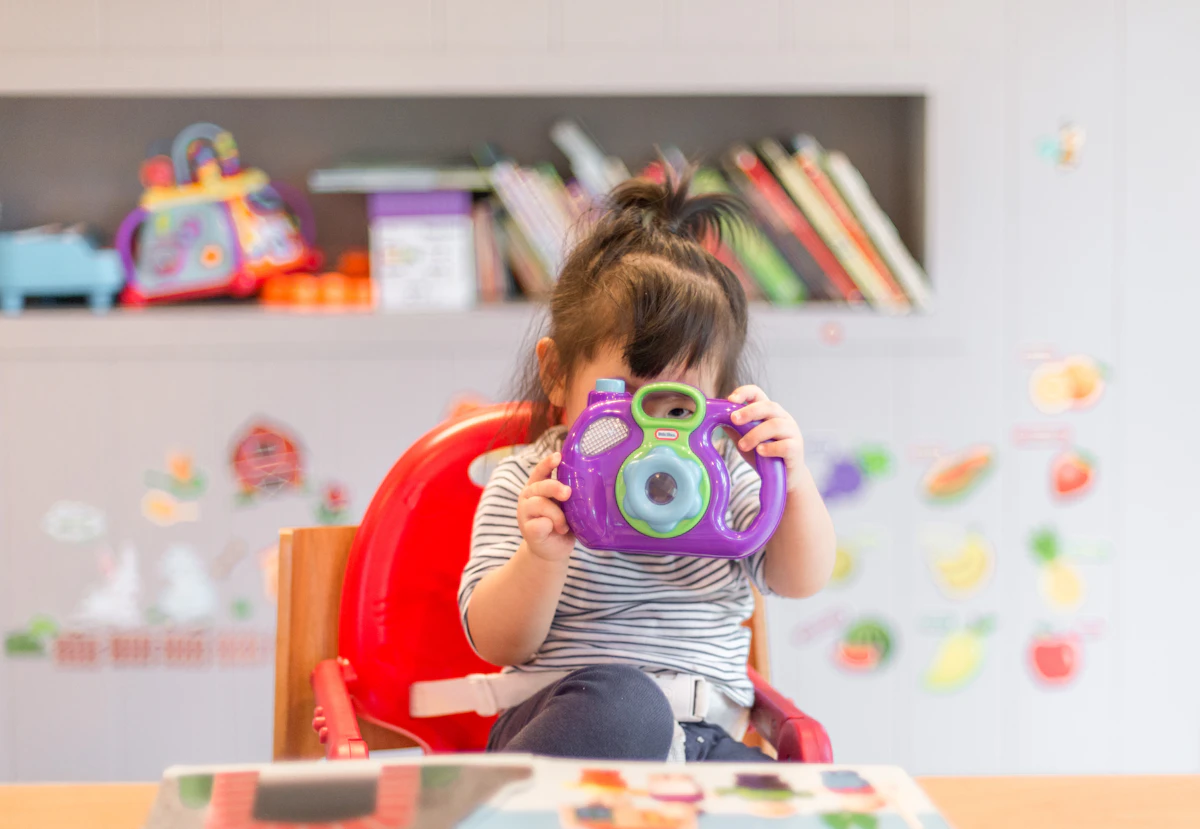
If you have ever watched your child spend thirty minutes deeply focused on turning a simple cardboard box into an imaginary spaceship, you have witnessed the magic of play. To an adult, it might look like a simple way to pass the time. But inside that little mind, neurological fireworks are going off.
We often meet parents in Guwahati who wonder: "When does the real learning start? When do they start memorizing the alphabet?" At DuckBurg Smart Kids, our answer is simple: The real learning is happening right now, in the sandbox, with the building blocks, and during dress-up. Decades of early childhood research prove that children learn best not through rote memorization, but through active, joyful, play-based exploration.
Let's dive deep into the science and magic behind why play-based learning is the absolute best foundation for your child's future.
1 It Builds Advanced Problem-Solving Skills 🧩

When a child tries to build a tower of blocks that keeps falling over, they aren't just playing; they are conducting physics experiments. They are testing hypotheses: "If I put the heavy block on top, it falls. If I put it on the bottom, it stays."
Play-based learning presents children with open-ended problems that have no single "right" answer. Whether they are figuring out how to construct a bridge over a pretend river or sorting shapes into matching holes, they are developing critical thinking. They learn to analyze a situation, try a solution, fail safely, and try again. This builds immense cognitive resilience—a trait that will serve them well in high school, college, and beyond.
2 Accelerates Language and Literacy 🗣️
You might be surprised to learn that dramatic play (like playing "house," "grocery store," or "doctor") is one of the most powerful vocabulary builders for toddlers and preschoolers.
When children engage in pretend play, they are forced to use language to explain what they are doing, negotiate roles with their friends, and narrate their imaginary worlds. They experiment with new words they've heard adults use. A child playing "restaurant" will suddenly start using words like menu, order, delicious, and bill. At DuckBurg Smart Kids, our teachers actively participate in this play, introducing rich, descriptive language that expands the children's linguistic capabilities naturally.
3 Cultivates Deep Emotional & Social Intelligence 🤝
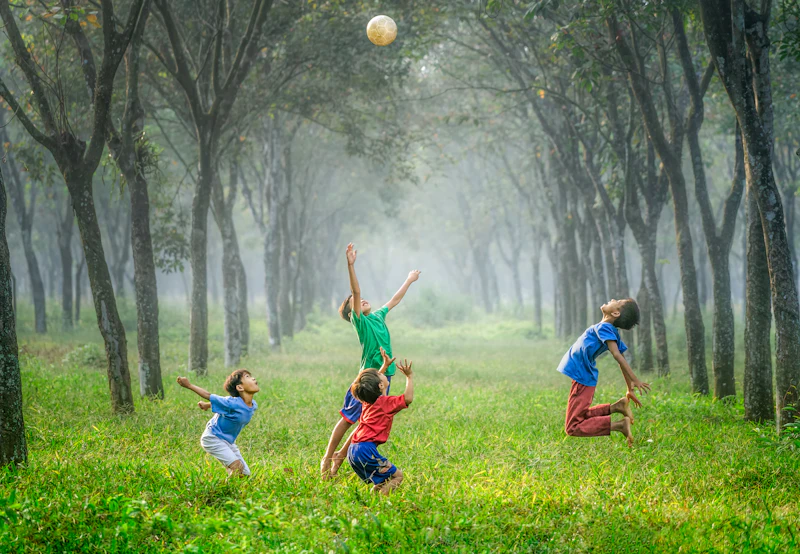
Academics are important, but emotional intelligence (EQ) is what truly determines a person's success and happiness in life. The preschool classroom is a child's first mini-society.
Through unstructured play, children learn the complex rules of social engagement. They learn how to share a coveted toy, how to wait for their turn on the slide, and how to comfort a friend who scraped their knee. They also experience conflict—two kids wanting the same red crayon—and learn how to resolve it through compromise rather than tantrums. These social skills cannot be taught from a blackboard; they must be lived and practiced daily.
4 Develops Crucial Motor Skills 🏃♂️

Before a child can properly hold a pencil to write the alphabet, they must have strong fine motor skills. Before they can sit attentively at a desk, they must have core strength and developed gross motor skills.
Play is the ultimate physical therapy! Running, jumping, climbing, and dancing build the large muscle groups (gross motor). Meanwhile, activities like squishing playdough, threading large beads onto a string, finger painting, and picking up tiny objects build the small muscles in the hands and fingers (fine motor). A robust play-based curriculum ensures that a child's body is just as prepared for school as their mind.
5 It Sparks a Lifelong Love of Learning 🚀

Perhaps the most magical aspect of play-based education is how it protects a child's intrinsic motivation. When learning is fun, children want to learn.
If we force young children to sit still and drill flashcards, we risk teaching them that learning is a boring chore. But when a child learns about volume by pouring water between different sized cups at a water-play table, learning becomes a joyous discovery. At DuckBurg Smart Kids, we aim to preserve that wide-eyed wonder. We want our little graduates to step into elementary school not just prepared, but excited to discover more about the world.
Experience the Magic in Person! ✨
Are you looking for an environment where your child can thrive, explore, and learn through joyful play? Come see our innovative curriculum in action.
Admissions at DuckBurg Smart Kids are now OPEN!
📍 Visit our Guwahati Campus
📞 Call us today to schedule a personalized tour.
💬 Comments